





12 Laundry Tile Ideas That Look Good and Work Hard
12 Laundry Tile Ideas That Look Good and Work Hard
Your laundry works just as hard as your bathroom – water, cleaning products, washing gear, and usually plenty of foot traffic. Your tiles need to handle all of that. Here are twelve laundry tile ideas drawn from real laundry tile combinations. We’ll talk about what they are, where they belong, and why they hold up.
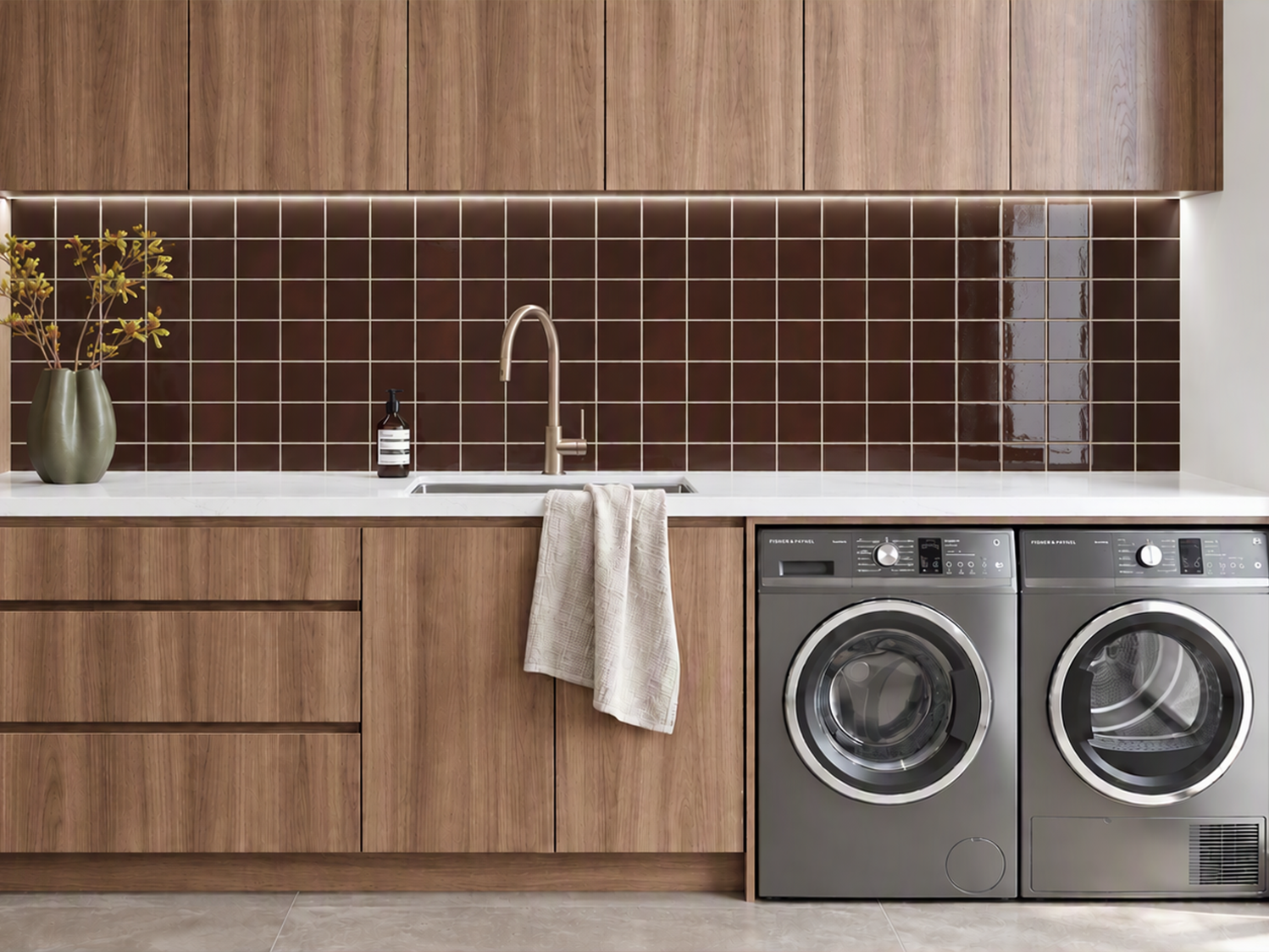
Five laundry tile ideas worth stealing
1. A yellow that earns its place
Urban Atelier Amarelo is a 100x100mm gloss ceramic in a warm, saturated yellow. It does what a bold colour should on the splashback – it lifts the room. The gloss finish reflects light and wipes clean easily. Pair it with natural timber, neutral walls and a plain floor tile that stays out of the way. Wall application only.

2. Texture that does the talking
Zellige White is a 125x125mm handmade wall tile whose surface variation (slight irregularities in the glaze, subtle shifts in tone) catches light differently through the day. It’s a wall tile that doesn’t need pattern or colour to be interesting. Sage green cabinetry, natural timber shelves, a clean floor. The tile does more than enough. Wall application only.

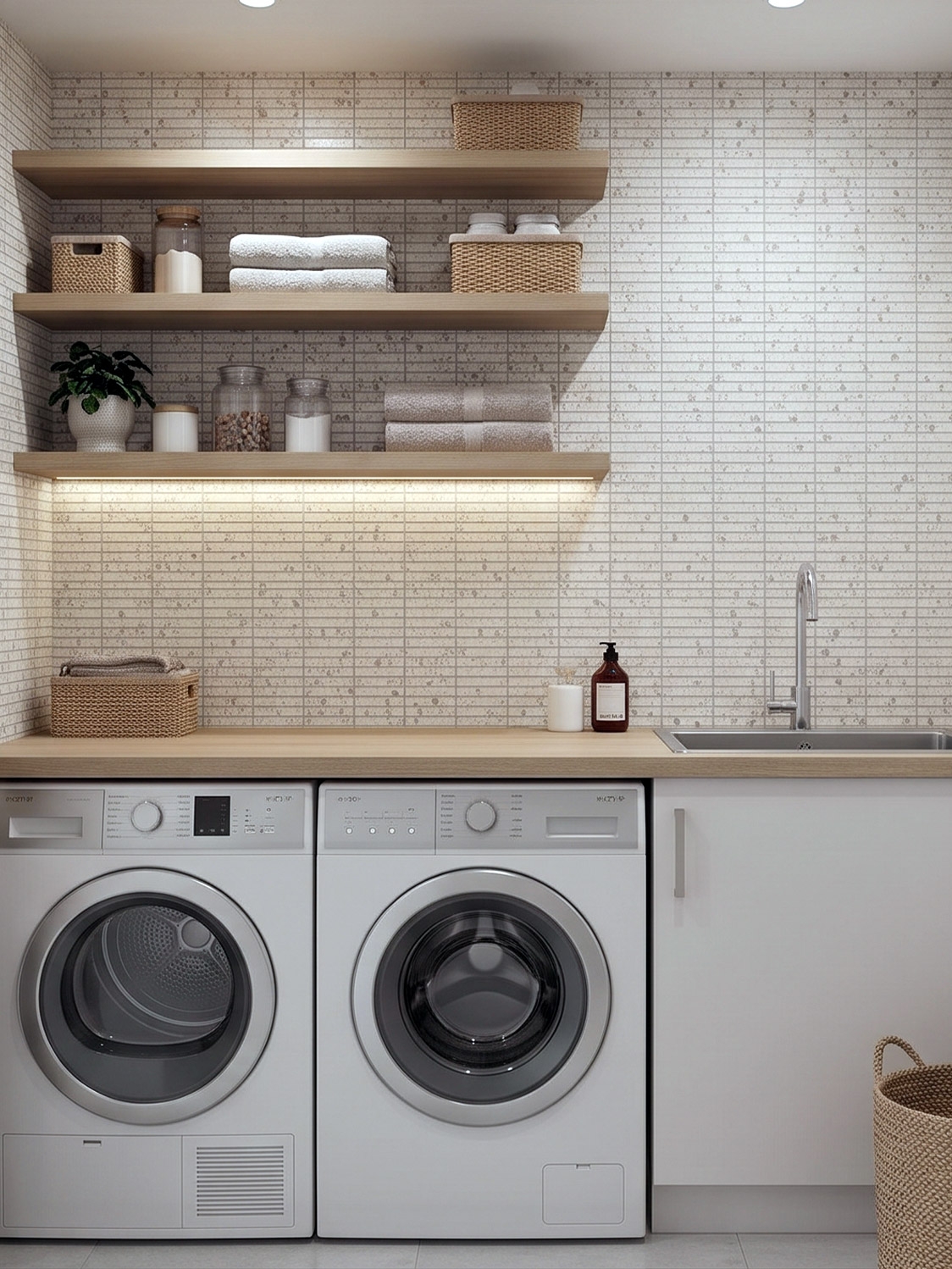
3. Terrazzo on the walls
Riviera Mosaics brings classic Venetian terrazzo to a compact laundry, with small-format mosaics available in ten designs spanning vibrant colour contrasts and muted tone-on-tone combinations. Wrapped across the walls and splashback, the mosaic adds colour, texture and character, helping a small space feel more considered. Suitable for both flat and curved surfaces, Riviera is also a versatile choice for creating a seamless look around corners and architectural details. For this look, choose something plainer and easier to maintain on the floor.
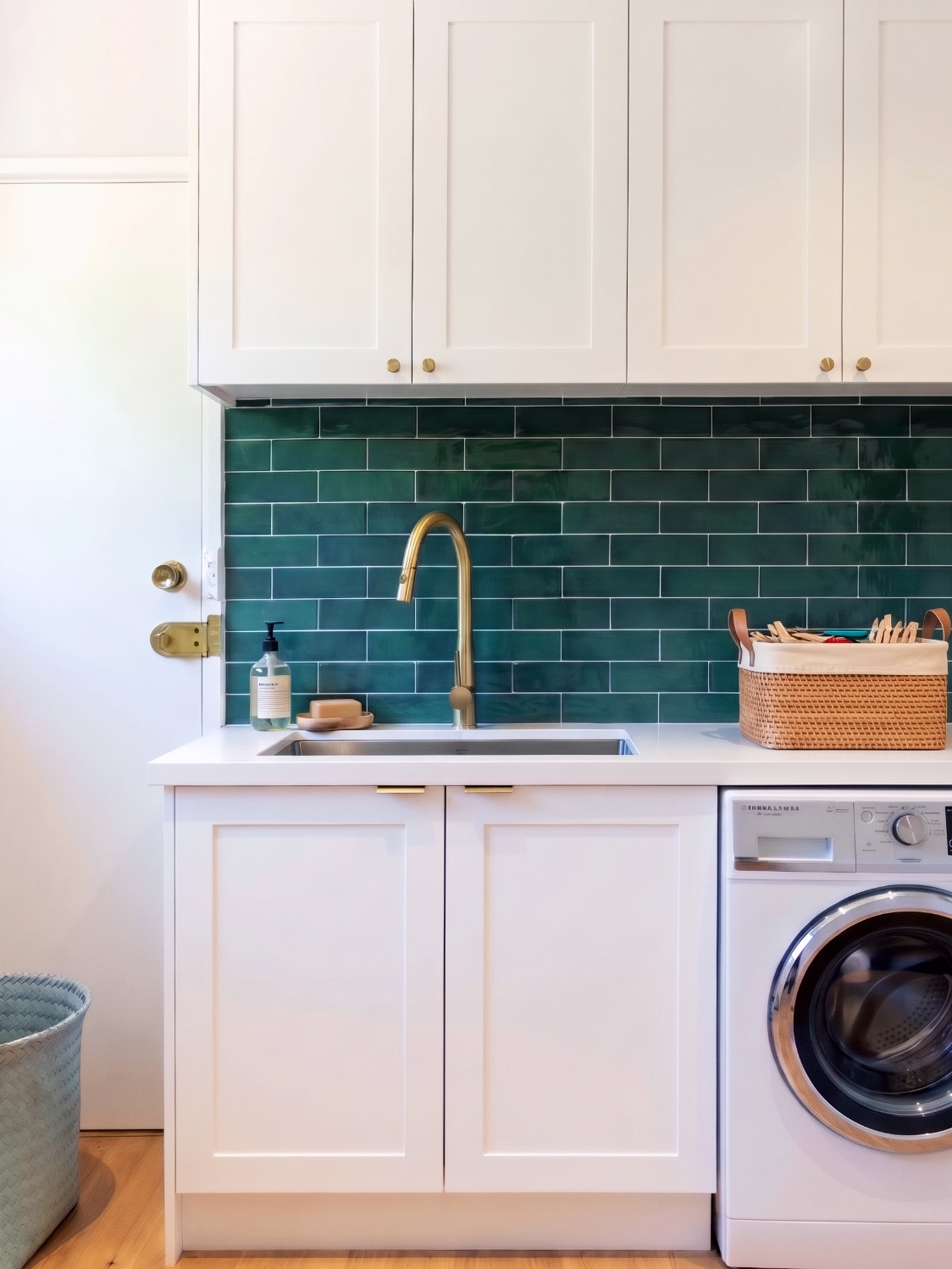
4. Deep green, calm yet dramatic
Paloma Moss Green is a gloss wall tile in a deep, shifting green. The tonal variation comes from the glaze itself; no two tiles are identical, so the surface has depth without pattern. White walls and warm timber cabinetry are all it needs. This is a room where the colour is doing the heavy lifting, and everything else steps aside. Wall application only.
5. A floor that asks to be noticed
Small-format porcelain tiles laid on the diagonal can turn a laundry floor into a feature. The Stage Terracotta and Stage White together bring a warm, organic quality. And for a slightly more muted take, try Stage Taupe in place of white. 60x300mm, floor and wall rated, warm earthy tones, matt finish.
Alternate the two in a herringbone layout and you get a geometric floor with enough movement to be interesting (and enough restraint not to compete with the rest of the room). Works with almost any cabinetry colour, but is calming and neutral paired with white.

Laundry floor tile ideas
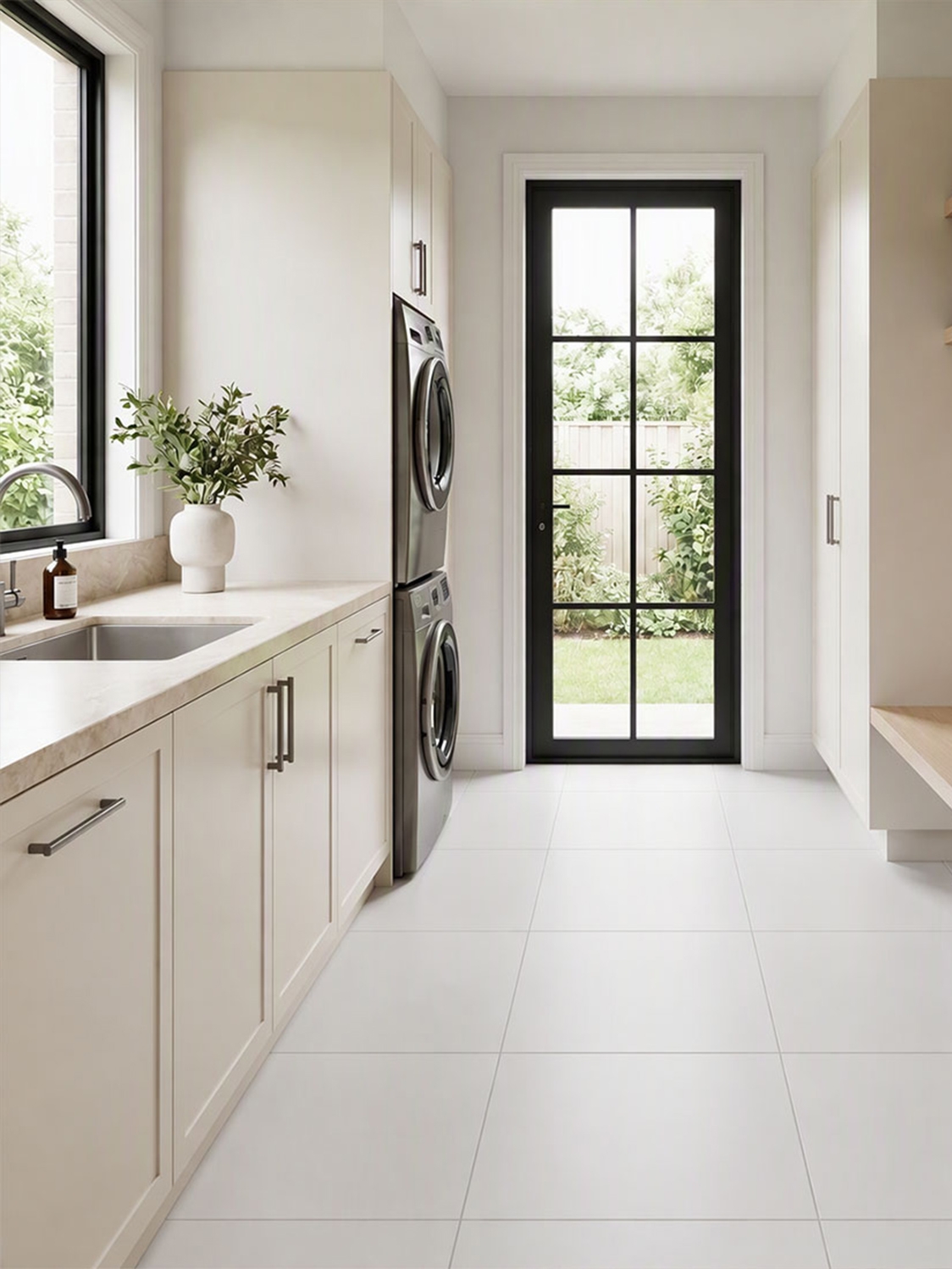
The laundry floor is a working surface. It gets wet from the machine, from the sink and from wet (often dirty) shoes coming in from outside. Your tile choice matters less for its look than for how it handles all of that.
Start with the finish
A matt or textured surface grips better underfoot when wet than a polished or gloss finish.
Larger formats = fewer grout lines
A 300x300mm tile or larger means fewer joins across your floor competing for attention. They can help the room feel calm. Fewer joins also means less grout to trap detergent, water and grime in a busy room that gets wet, splashed and walked on with muddy boots.
Concrete-look porcelain
A concrete-look porcelain like the Concrete Fusion range suits a contemporary laundry. Matt surface, floor rated, handles wet conditions without fuss. Available in a range of neutrals such as sand, pewter and steel. The look is quiet enough to let the splashback do its thing.
Timber-look flooring tiles
Floor-rated timber-look tiles bring warmth to a utilitarian room without any of real timber’s vulnerability to moisture. They work particularly well in laundries that open onto a kitchen or living area, where the floor continues the indoor feeling rather than signalling a utility switch. National Tiles carries timber-look options in nut, honey, natural and greige.
Terrazzo-look porcelain
If you want the terrazzo look on the floor, where it works beautifully, you could also consider a porcelain terrazzo-look tile rather than natural terrazzo. Porcelain is non-porous, floor rated, handles wet areas without sealing, and doesn’t require the maintenance cycle that natural terrazzo does. The look is the same. The upkeep isn’t.
Laundry splashback tile ideas
The splashback is the room’s design moment. It’s also one part of a laundry renovation that many underestimate – sometimes tiled to the minimum height with whatever’s left over from the bathroom. A considered splashback choice changes how the whole room feels.

Subway tiles
Subway tiles are the reliable choice, and for good reason. Horizontal stack behind the sink is classic; vertical stack gives the wall more height.
Penny round or kit kat
Small-format mosaic tiles suit the splashback zone. Penny Round White in 310x315mm sheets is wall rated (not for your floor), and the small scale adds texture without overwhelming a compact space. Kit Kat tiles bring a similar energy in a rectangular finger format. Both come in a range of colours; white and off-white are the easiest to live with long term, unless you know you enjoy a good dose of colour.
Mosaic tiles go further than just Penny Round or Kit Kat; you can find them in a range of shapes in glass, porcelain and stone. Each brings something different to your wall.
Zellige
A zellige splashback is the room’s focal point. The handmade glaze variation means the surface catches and shifts light in a way no machine-made tile does. Zellige White works particularly well here. It’s a wall tile only, so keep it to the splashback zone and let it do its work.
Encaustic-look porcelain
Pattern and colour in a tile body that doesn’t need sealing. Encaustic-look porcelain tiles deliver the heritage visual (geometric pattern, matte finish, strong colour) with none of the maintenance that real encaustic cement tiles require. Good behind a sink; the pattern scale suits the splashback height well.
How high should a laundry splashback go?
The National Construction Code minimum for water-resistance is 150mm above the sink rim. The practical standard most tilers and designers work to is 600mm; this covers the full splash zone and looks intentional.
Behind a washing machine bay, tiling to approximately 600mm above the floor is good practice; it protects the wall from vibration, condensation and the occasional hose mishap. Full-height splashbacks are increasingly popular, particularly when the tile is the room’s hero and the budget allows it.
Choosing your floor and splashback together? Our Design Pro consultants have these conversations every day. Book a free consultation.
Small and narrow laundries
Most Australian laundries are not generous rooms. The European laundry (a cupboard behind bifold doors, or a nook off the hallway) is increasingly common, particularly in apartments and newer builds. A few tile decisions make a big difference in a tight space.

Lighter tones feel larger
In a compact laundry, the contrast between tile and grout is more visible. A tight grout joint in a similar tone to the tile makes the surface feel more continuous and the room feel less chopped up.
Scale the tile to the room
A 100x100mm or 150x150mm tile suits a small laundry better than a large format. Forcing 600x600mm into a cupboard-sized space can feel odd.
Lay it on the diagonal
Turning the tile 45 degrees draws the eye across the floor rather than straight down a narrow run. It’s one of the oldest tricks for making a tight space feel wider, and it works on any square tile. One thing to factor in is that diagonal laying increases cutting at the edges, so add a little extra to your order. Our area calculator accounts for wastage – use it before you buy.
Vertical stacking on the splashback
Vertical stacking draws the eye upward, adding perceived height in a low-ceiling or shallow space.
Continue the floor tile through the doorway
Where a laundry opens onto a kitchen or hallway, running the same floor tile through both sides of the threshold removes the visual border (which makes a small room feel smaller).
The practical stuff worth getting right
Grout colour and type
In a laundry, grout sees detergent, moisture and a lot of regular foot traffic. Dark grout hides what light grout shows. Epoxy grout resists staining and moisture better than cement grout and is worth the upgrade in a wet room. It’s harder to install but easier to live with.
Sealing
Porcelain tiles don’t need sealing; they’re non-porous and handle moisture without it. Natural stone and real terrazzo do. When your tiles call for it, seal before use, and reseal every couple of years to protect the surface from moisture and staining.
Cleaning
Use a pH-neutral cleaner and a mop on your matt finish laundry tiles. Avoid bleach-based products on grout regularly; they lighten and degrade it over time. The tiles are the easy part. The grout is where maintenance decisions catch up with you.
Carry the look through
One detail worth thinking about early: where does your laundry sit relative to the kitchen or bathroom? A laundry that opens off a kitchen, or shares a wall with a bathroom, is an opportunity to run a consistent floor tile or complementary palette through both spaces. The transition between rooms will feel considered.
If you’re planning both rooms at once, book a Design Pro consultation to work through it – our team does this every day.
Ready to see what your laundry could look like?
Find your nearest store · Order a $9.95 sample · Book a free Design Pro consultation
You can also see more kitchen splashback ideas, read about porcelain vs ceramic and how to work with tile sizes.
Frequently Asked Questions (FAQ)
- Should I tile the laundry floor, splashback, or both?
A: Porcelain with a matt, honed or grip finish (usually rated P3 or above, but not always) is the most practical tile type for bathroom floors. Porcelain’s low water absorption makes it the right material for wet areas, and the finish determines how much grip the surface provides. Matt and honed finishes both deliver good slip resistance without sacrificing style. If you’re tiling a shower floor specifically, look for P4 or above. - What tiles are best for a laundry floor?
Porcelain or ceramic with a matt or textured finish. Always make sure they’re floor-rated – check the product page before you buy, as wall tiles should never be used on floors. A matt or structured surface grips better when wet than a gloss or polished finish, which is really important for a floor that regularly gets wet. - How high should a laundry splashback go?
The practical standard is 600mm above the sink rim, which covers the splash zone and looks intentional. The NCC minimum for waterproofing above the sink is 150mm, but most tilers recommend going further. Full height is increasingly popular when the tile is the design feature. - Do laundry floor tiles need to be slip rated?
For most residential laundries, the finish matters more than the rating number. A matt or textured surface provides better grip when wet than a gloss or polished tile. Check the product specification for your specific tile, and if you’re unsure, ask in-store.