


The Complete Guide to Tile Sizes and Thickness
The Complete Guide to Tile Sizes and Thickness
If you're working through tile sizes and tile thickness, you're at the point where small decisions start to have big consequences.


Tile size isn't just about what looks good. And thickness isn't just another spec on a product page. Together, they affect how your space feels, how it's installed, and, importantly, how it connects to other rooms and whether things like doors, levels and transitions actually work.
So instead of just listing standard tile sizes, let's walk through this properly. We'll look at the whole room by covering:
- - Common tiles sizes in Australia
- - Tile thickness and tiling thickness (not the same thing)
- - How your tiling connects with your space
- - Choosing tiles for different rooms
- - Cost and installation considerations
First, we put together a quick reference guide so you can scan to see the numbers quickly.
Tile sizes and thickness: your quick reference guide
When you're comparing tile sizes and tile thickness, it helps to see everything in one place before getting into the detail.
The sizes below are the most common tile sizes you'll find across the National Tiles range when shopping by size, but we have a kaleidoscope of other sizes for you to discover.
Tile sizes by category
| Category | Common tile sizes (mm) | Where you'll typically use them | What to expect |
|---|---|---|---|
| Subway tiles | 75x150mm, 100x200mm, 100x300mm | Splashbacks, bathroom walls | Flexible layouts (stacked, brick, vertical). More grout = more texture |
| Small tiles | 100x100mm, 200x200mm, 300x300mm | Bathroom floors, features | Easier for falls and grip. More grout lines to maintain |
| Medium tiles | 300x600mm, 400x400mm, 450x450mm, 600x600mm | Walls and floors throughout the home | Balanced option. Widely used and installer-friendly |
| Large format tiles | 600x1200mm, 800x800mm, 1200x1200mm | Living areas, open-plan floors, modern bathrooms | Fewer grout lines = cleaner, more continuous look |
| Panels / slabs | 1200x2400mm+ | Feature walls, bathrooms, splashbacks | Minimal joins. Requires specialist handling and install |
Tile thickness guide
| Tile type | Typical tile thickness | Where it's used | Why it matters |
|---|---|---|---|
| Wall tiles | ~6-10mm | Splashbacks, bathroom walls | Lighter and easier for vertical installation |
| Floor tiles | ~8-12mm | Indoor floors | Designed for durability under foot traffic |
| Outdoor / heavy-duty tiles | ~10-20mm | External areas | Built for load, weather and movement |
| Large format panels | ~6-12mm (engineered) | Walls, splashbacks | Large size with reduced weight, needs skilled install |
Tile sizes in Australia and what they actually mean for your space
Across Australia, tile sizes are typically measured in millimetres (mm) and grouped into broad categories. Each size creates a different visual rhythm in the room.
Some feel detailed and textured. Others feel calm and continuous. The right choice depends on what you want the space to feel like when you walk into it.
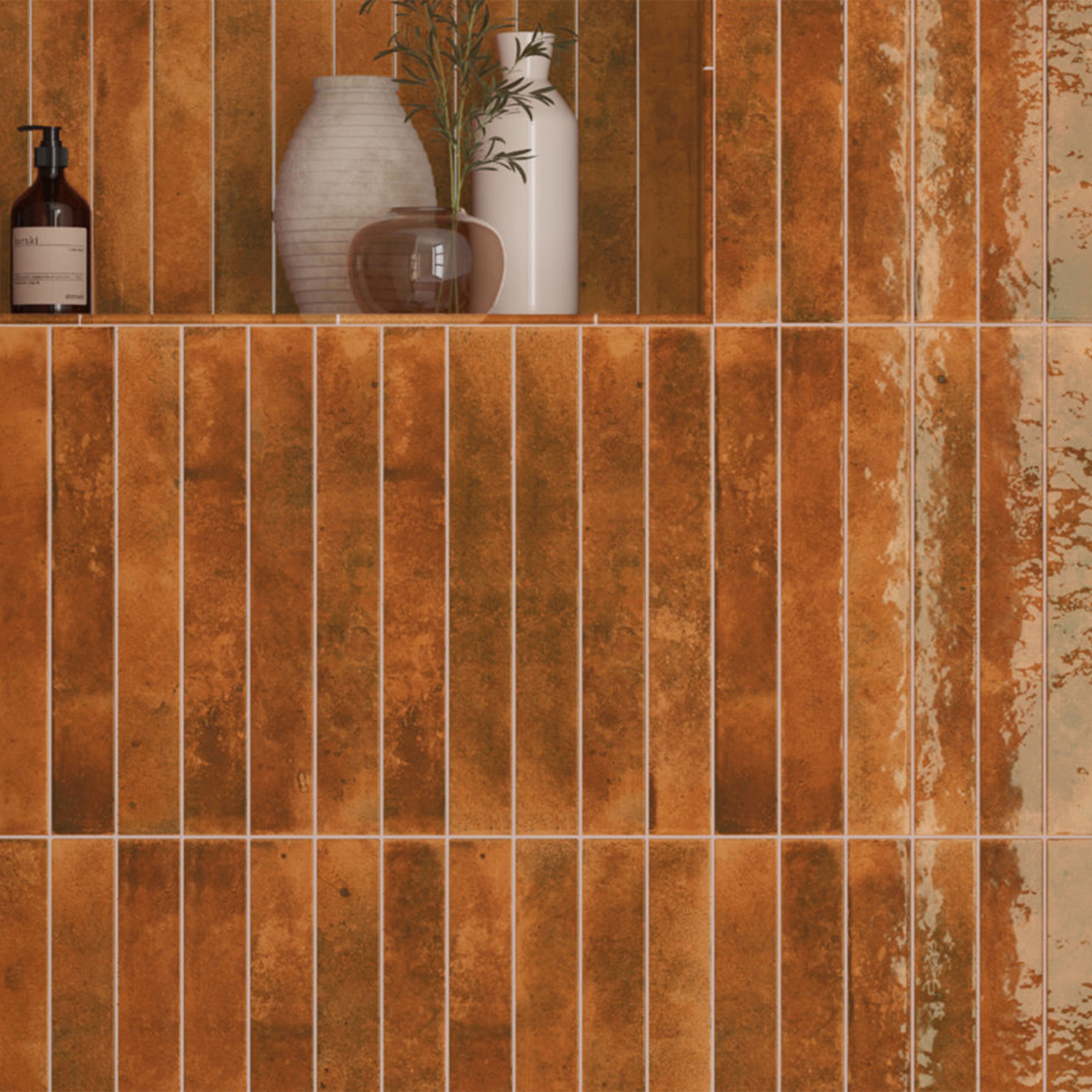
Subway tiles: small format with flexibility (75x150mm, 100x200mm, 100x300mm)
Subway tiles are iconic, yes, but they're also easy to work with and adaptable. It's not just the tile. It's what you can do with the layout.
- - A horizontal brick pattern feels familiar and settled
- - A vertical stack draws your eye up and can lift the height of the room
- - A tight stacked layout feels more structured and contemporary
This is one tile format where you can significantly shift the feel of a space just through the pattern.
Don't underestimate the grout – with smaller tiles, grout becomes a visible part of your design. It creates rhythm across the wall. Sometimes that's exactly what you want (especially in a simple kitchen or bathroom), but in a space that already has a lot going on, those extra lines can start to compete for attention. It also means more cleaning over time, particularly on splashbacks.

Photography by Jack Gibson

Small tiles and mosaics (typically 25x25mm to 100x100mm)
Small tiles are usually used as a feature tile or to solve specific functional problems. You'll usually see them where flexibility matters. Places like shower floors (where they follow the fall more easily), curved surfaces (where larger tiles won't sit properly) and feature details (where you want texture and variation).
Visually, they create a finer grain across the surface. That can feel intricate and detailed, but also busier.
From a practical perspective, they come with trade-offs: more labour due to the number of pieces, more grout lines to maintain, and a finish that draws more attention to itself. They work brilliantly when used with intent – either to solve a functional requirement or to create a deliberate feature.

Photography by Kosk Photography

Photography by Franzi Photography
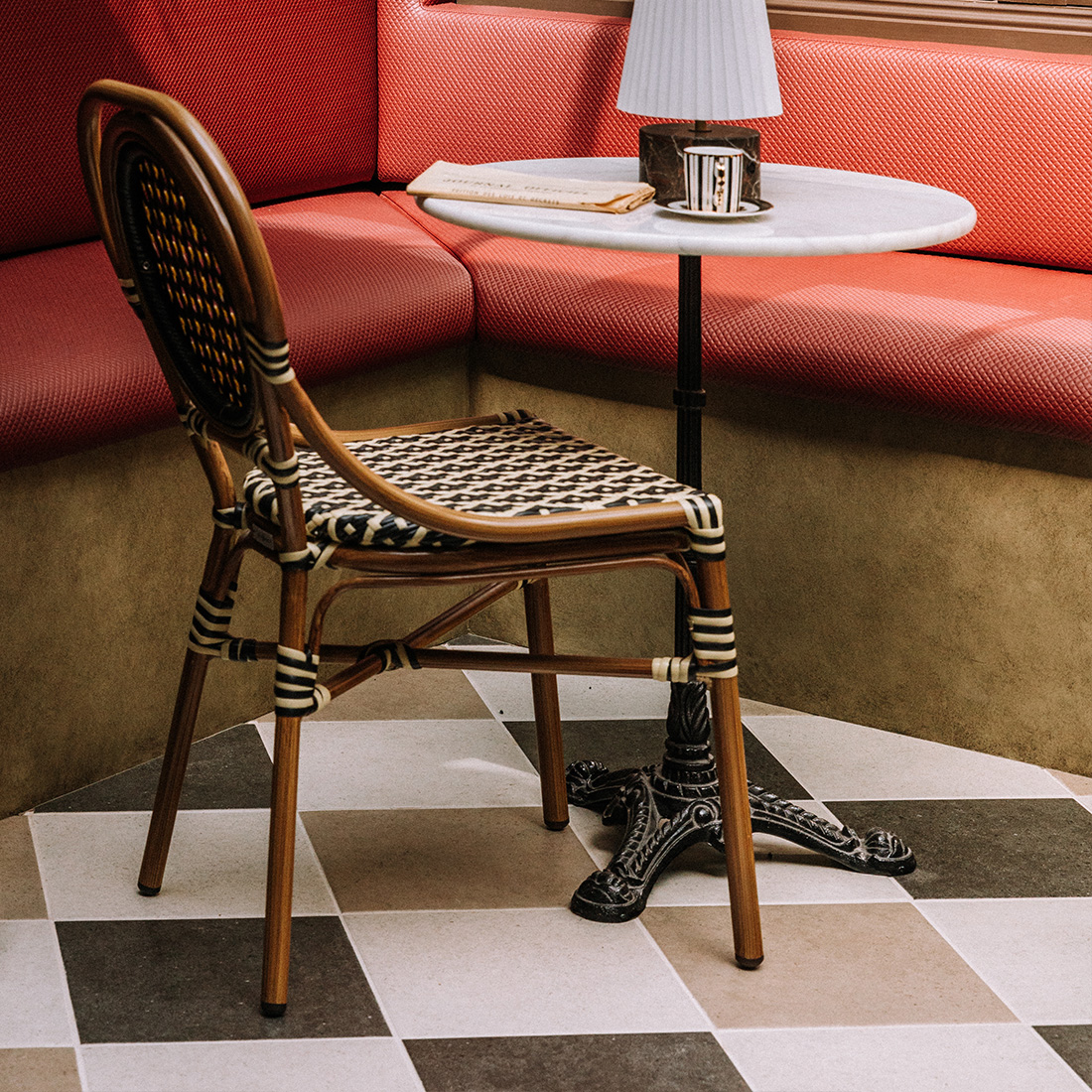
Medium tiles: the workhorse sizes (300x300mm, 300x600mm, 450x450mm)
This is one of the most common tile sizes; it's where many residential projects land, particularly in bathrooms.Medium tiles sit in a comfortable middle ground. They reduce grout lines compared to smaller tiles, but they're still manageable to install without specialist tools or preparation. A 300x600mm tile, for example, is widely used because it works across different layouts and room sizes without creating unnecessary complications.
Design-wise, these tiles tend to feel balanced. They don't dominate the space, but they don't disappear either.
They're also more forgiving:
- - Easier to cut and fit around fixtures
- - More adaptable in smaller or irregular rooms
- - Less reliant on perfectly straight walls
This category is a reliable place to start if you're trying to get the fundamentals right without overcomplicating your project.
Design by Sharon Parker Curated
Photography by Bec Haycraft

Design by Melanie Redman Design
Photography by Tenielle Salmon – Soul Images
Large format tiles: cleaner, quieter surfaces (600x600mm, 600x1200mm)
Large format tiles shift the design focus from detail to continuity. With fewer grout lines, the surface reads more as a single plane. That's what gives larger tiles their calm quality – your eye moves across the space without stopping.
In open-plan homes or smaller rooms, this can make a noticeable difference. Your space feels less broken up and more connected.
But there is a big caveat here. This simplicity comes with a requirement: the surface underneath needs to be just right.
Large tiles don't hide imperfections in your wall or floor in the same way that small tiles can. You guessed it, they actually highlight them.
If your substrate isn't flat enough:
- - Tile edges can sit unevenly (lippage)
- - Adhesive coverage becomes inconsistent
- - The finished result won't feel resolved, even if the tile itself is good
So, while they can look incredible, they rely on careful preparation and installation.


Grout lines: the hidden divider
Every grout line breaks up a surface. More grout lines = more visual segmentation. Fewer grout lines = more continuity. That's why large tiles often feel more open – the eye moves across the surface without stopping.

Scale: matching tile to room size
A common mistake is choosing tiles that are too small for the space. In a larger room, that can make the floor feel busy. In a smaller room, it can make it feel cluttered.
But equally, oversized tiles in a very tight space can create awkward cuts, which break the effect you were trying to achieve. There's always a balance.

Photography by Franzi Photography

Direction and layout
Tile direction changes how you read a room.
- - Running tiles along the length of a room emphasises that length
- - Running them across it helps counteract narrowness
- - Vertical layouts draw your eye upward
You're not physically changing the space with your chosen direction, but you are subtly changing how it's perceived.


Tile thickness explained (and what "tiling thickness" really means)
When you see tile thickness listed, that's just the tile itself. But in practice, what matters is the total tiling thickness, which includes:
- - Tile
- - Adhesive
- - Sometimes levelling compound or screed
- - Sometimes waterproofing
Typical tile thickness ranges (approximate):
- - Wall tiles: ~6-10mm
- - Floor tiles: ~8-12mm
- - Outdoor tiles: ~10-20mm
- - Large format panels: thinner, often around 6mm, but engineered differently
These vary depending on the product, so always check the spec. (This is where things can go wrong if not considered and planned for early.)
Why tiling thickness matters more than most people expect
Floor heights and door clearances
Tile and adhesive combined can easily add 10-20mm to a floor. That affects how your doors open and close, step heights and transitions between rooms. If one room is tiled and another isn't, that difference needs to be managed properly.


Photography byThe Macro Scene
Transitions between materials
This is one of the most common issues people run into. From kitchens or bathrooms into other spaces, you may be moving from tile to timber, carpet, or vinyl. If the thicknesses don't line up, you'll need:
- - Transition trims
- - Levelling adjustments
- - Or compromises in finish
These transitions are certainly manageable, just something to consider and plan for.


Adhesive and substrate preparation
As we discussed above, larger tiles often need more consistent adhesive coverage and flatter substrates. If your surface isn't prepared properly for large tiles, the tile size and thickness will expose that. If you're mid-reno, you may find a rogue wall or floor surface takes you by surprise.
Durability and load
It makes sense that thicker tiles tend to be used in outdoor areas and high-traffic zones because they're designed to handle more load and environmental movement. Again, this is pretty easily managed with strong awareness and planning.
Okay, let's move onto what you should consider about each different room in your house.
Choosing tile sizes and thickness for each room
This is where everything comes together. Tile size and thickness don't exist in isolation. They respond to how each room is used, how water moves, how people move, and how the space connects to the rest of your home.
Bathrooms
Bathrooms are where tile decisions can feel the hardest, because you're balancing water, safety, layout, and visual clarity all at once.
Floors: smaller tiles where function matters
On bathroom floors (especially in showers) smaller tiles like mosaics or formats up to around 100x100 or 200x200 are commonly used because they:
- - Follow the fall to the drain more easily
- - Provide more grout lines, which improves slip resistance
If you try to use larger tiles in a shower floor, you'll often run into awkward cuts or poor drainage unless the space is designed for it from the start.


Walls: medium to large tiles for a cleaner result
On walls, moving up to 300x600mm or even 600x600mm reduces grout lines and gives a more resolved, easier-to-maintain surface. If you're working in a smaller bathroom, this is one of the simplest ways to make it feel less busy.
Where thickness really matters in bathrooms
Bathrooms are one area where thickness directly affects how your space performs.
- - Shower falls: The tile and adhesive build-up needs to work with the fall to waste. Too much thickness can make transitions into the shower awkward.
- - Waterproofing build-up: Membranes and screeds add to overall thickness, so tiles don't sit directly on the substrate.
- - Transitions to adjoining rooms: Bathroom floors often sit slightly lower or require a step-down for water containment. Tile thickness plays into how that transition is handled.
For more on planning and tiling a bathroom, read our guide on how to tile a bathroom. Or, browse our huge range of bathroom tiles.


Photography by EMP Media
Kitchens
Kitchens are less about water management and more about balance between practicality, cleaning, and visual cohesion.
Splashbacks: smaller formats for control and detail
Subway tiles and smaller formats are popular here because they:
- - Work easily around power points and cabinetry
- - Allow flexibility in layout (stacked, brick, vertical)
- - Add a level of texture without overwhelming the space


Floors: larger tiles for simplicity and cleaning
For floors, larger tiles (600x600mm or 600x1200mm) are typically easier to live with. It's simple: fewer grout lines = easier cleaning, and a more continuous surface = less visual interruption.


Where people get it wrong
The biggest issue in kitchens isn't usually the tile itself, but mixing too many formats.
For example:
- - Small patterned splashback
- - Small floor tile
- - Contrasting grout
- - Multiple finishes
Individually, these can all work. Together, they can make the space feel fragmented. A good rule of thumb is to let one element carry detail (often the splashback), and keep the rest more restrained.
Living areas
Living areas benefit from consistency and scale.
Larger tile sizes tend to work best
Tiles in the 600x600mm to 600x1200mm range are commonly used because they:
- - Reduce visual noise across large areas
- - Create continuity between spaces
- - Work well in open-plan layouts
In these areas, the goal is usually to make the floor feel like one continuous surface rather than a collection of smaller sections.
Thickness considerations in living spaces
Tile thickness itself is usually standard here, but what matters is how it connects to other materials:
- - Timber flooring
- - Carpeted bedrooms
- - Entry thresholds
Even a few millimetres difference can create noticeable transitions if not planned early. Get planning with our living room tiles.


Outdoor areas
Outdoor tiling is about performance under our Aussie conditions first, and aesthetics second.
Thickness and durability
Outdoor tiles are typically thicker (often 10-20mm) because they need to handle weather exposure, temperature changes, load and movement. They're built differently from indoor tiles, even if they look similar.


Size selection outdoors
Larger tiles can work well outdoors, but they need proper support underneath and the correct installation method (e.g. on slab vs pedestal systems). Smaller tiles or pavers can be more forgiving in areas where the substrate isn't perfectly uniform.
Slip resistance matters more than you think
Finish is just as important as size. Outdoor tiles need to provide grip, particularly when wet. So for your outdoor areas, you need to consider not just tile size but surface texture as well as cleaning and maintenance.
Cost and installation: what actually changes with tile size and thickness
Cost and installation are where some assumptions fall apart. We've covered these in more detail above, but here's a quickfire summary to save you going searching (making cost and installation considerations easier). There's no "cheapest" option in isolation; it depends on the full system.
Smaller tiles
- - Cheaper per tile
- - More labour
- - More grout
Large tiles
- - Fewer pieces
- - Higher skill required
- - More substrate preparation
Panels and slabs
- - Premium material
- - Specialist installation
- - Minimal joints
How to choose without second-guessing yourself
If you're trying to make a decision, this is the simplest way to approach it:
- 1. Start with the space. What are you working with? Size, shape, light.
- 2. Decide how you want it to feel. Clean and minimal? Detailed and textured?
- 3. Choose a tile size that supports that (not just what looks good on its own).
- 4. Check the installation requirements. Substrate, adhesive, layout.
- 5. Confirm thickness and transitions – especially between rooms.
That sequence helps you avoid most of the common mistakes.

Photography by Kosk Photography

Bringing it all together
Tile size and thickness aren't separate decisions. They work together. Size shapes how your space looks and feels. Thickness determines how it's built and how it connects to everything around it.
When you consider both early, your space feels resolved and works properly. But without proper planning, the issues tend to show up during installation (or worse, after everything is finished).
If you want to explore what's available and compare options properly, shop by size. And take your time with it. These are the decisions that set the foundation for everything else. Image suggestion: A beautifully styled room of any type. Maybe an aspirational image with people in it too.