





Types of Tiles and Tile Finishes: A Complete Guide
Types of Tiles and Tile Finishes: A Complete Guide
Choosing tiles feels complicated until you realise there are really only two main decisions to make: what the tile is made from, and how its surface is finished.
The different types of tiles (porcelain, ceramic, stone, glass and more) determine how the tile performs and where it works. The finish determines how it looks, how it feels underfoot and how easy it is to live with. Get both right and the rest of the decision tends to fall into place.
This guide covers both material and finish. We’ll run through the main tile materials, the full range of tile finishes available at National Tiles, and a practical room-by-room guide to help you match the right finish to the right space.
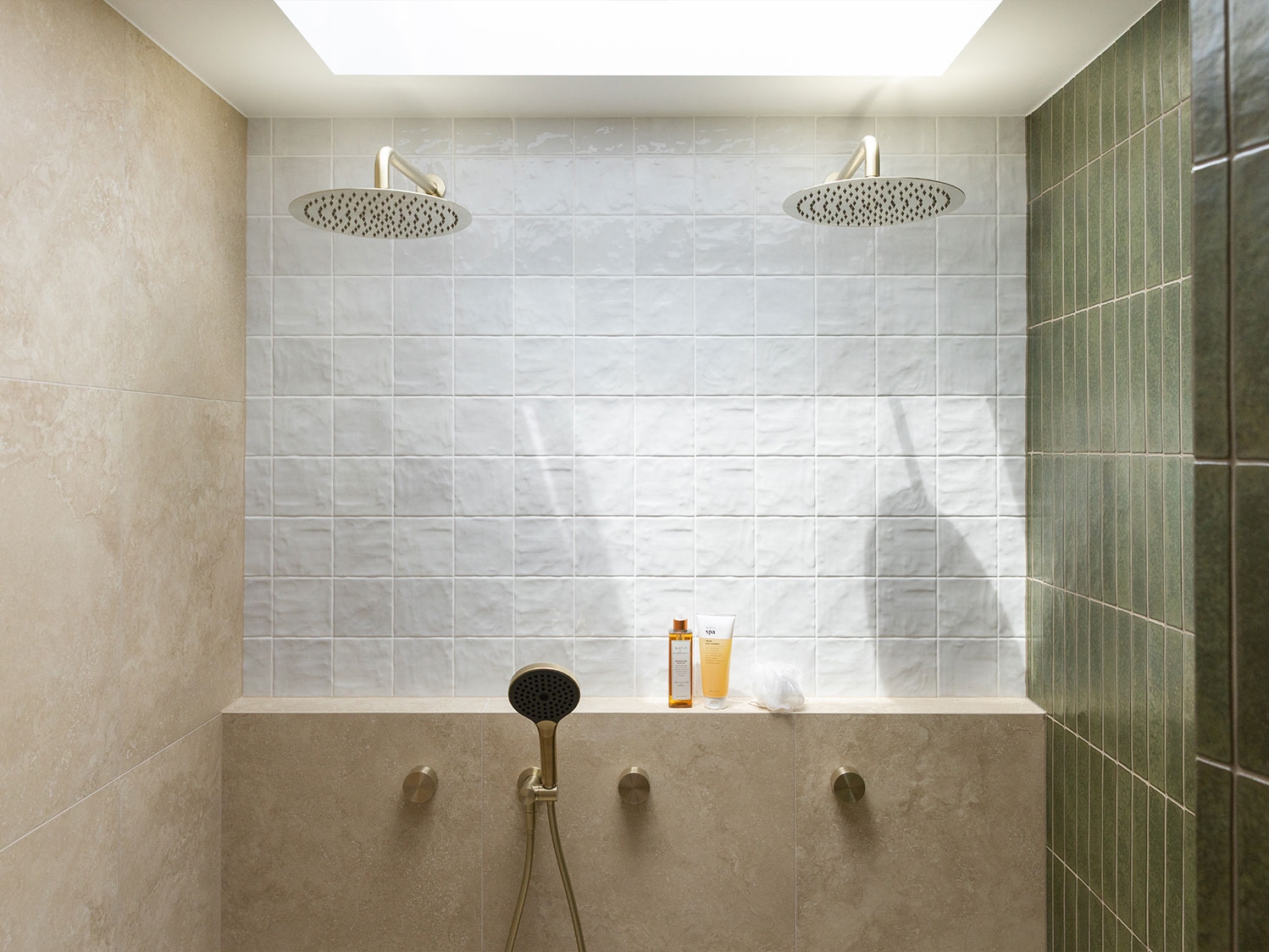
The Main Types of Tiles and What They’re Made Of
Understanding tile materials is the fastest way to narrow your search. Each material has a different density, water resistance and durability profile, which determines where it works, how long it lasts and how you care for it.
Porcelain
Porcelain is the most versatile type of tile material available. It works indoors and outdoors, on floors and walls, in wet areas and dry.
Fired at temperatures around 1,200-1,400°C, porcelain is extremely dense, with water absorption below 0.5%, making it hard-wearing, suited to outdoor use and at home in even the most demanding spaces.
Porcelain tiles suit bathrooms, kitchens, living areas, outdoor entertaining and commercial settings equally well. Care is simple; a regular wipe-down is all it needs, with no sealing required.
Ceramic
Ceramic is the practical, budget-conscious choice for walls and dry interior floors.
Fired at lower temperatures than porcelain, it’s slightly more porous and less suited to outdoor use or very high-traffic areas. Ceramic tiles perform well on kitchen splashbacks, bathroom walls, laundry walls and feature areas, and the wide range of colours, patterns and finishes makes it one of the most flexible options for creative interior tiling.
Wipe clean with a damp cloth, and seal the grout to keep it looking its best.
The differences between porcelain and ceramic tile types matter more in some rooms than others. In short: porcelain is denser, more water-resistant and better suited to floors, outdoor use and wet areas. Ceramic works well on walls and in lower-traffic interiors where its slightly softer composition isn’t a limiting factor. For the full comparison, including which one suits your specific room, read our guide to porcelain and ceramic tiles.
Natural Stone
Every natural stone tile is unique; use the variation in colour and pattern as a feature. Natural stone works beautifully on floors and walls both indoors and outdoors, though the specific stone type and finish will determine exactly where it’s best used.
Seal before grouting and reseal periodically; clean with a pH-neutral stone cleaner and avoid vinegar or citrus-based products, which etch the surface.
National Tiles stocks marble, travertine, limestone, bluestone, slate, granite and sandstone, each with its own character, texture and tone.
Glass
There’s one thing glass tiles do exceptionally well: they bounce light. Best suited to wall applications, splashbacks and mosaic features, glass is usually not appropriate for floors.
It’s highly resistant to staining and easy to keep clean, which makes it a practical and beautiful tile type for kitchen splashbacks and shower feature walls. The reflective quality adds brightness and depth to spaces where natural light is limited.
Mosaic
Mosaic tiles give you pattern and detail that larger tile types aren’t designed for.
Available in porcelain, glass and stone, mosaic tiles are mounted on mesh sheets for manageable installation, and are at home on shower niches, feature strips, pool surrounds and decorative borders.
The higher proportion of grout lines is worth accounting for, and sealing the grout is especially worthwhile here. For more on how mosaic format fits into the broader tile size picture, see our guide to tile size and thickness.
Terrazzo
Terrazzo brings a timeless, Italian-inspired character to contemporary Australian homes.
Terrazzo tiles are made from chips of marble, quartz or glass set in a cement or resin base and then ground smooth. They’re available in polished, honed and matt finishes, and suit floors and walls in living areas, bathrooms and kitchens.
The aggregate surface can absorb staining if left unsealed, so always seal before use and maintain with a pH-neutral cleaner.
Cement and Encaustic Look
Encaustic-look tiles deliver the handcrafted character of traditional cement tiles in a low-maintenance, modern format.
Typically made from porcelain or ceramic with a pattern printed onto the surface, they give you the artisan aesthetic without the fragility or ongoing sealing demands of true cement tiles. They’re well suited to kitchen floors, splashbacks, bathroom feature walls and laundry floors, and work equally well as a feature wall in living and dining areas.
Standard tile care applies: wipe clean and seal the grout.
Ready to put your shortlist together? Our tile buying guide walks you through the full decision, from room-by-room planning to budget and format.
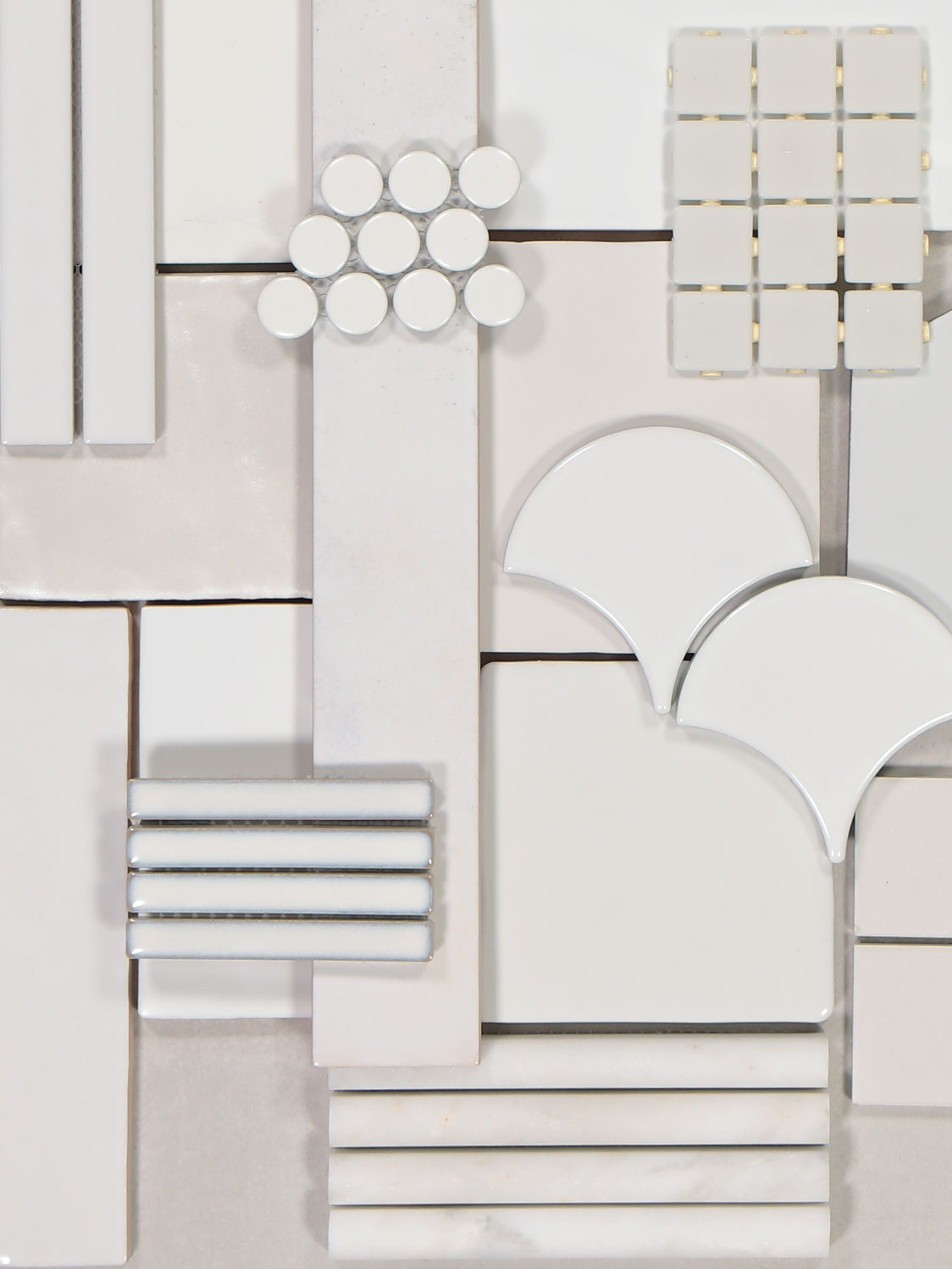
Tile Finishes, and How the Surface Changes Everything
Tile finish is the surface treatment applied to a tile after it’s formed. It changes everything about how the tile looks and feels: the way it reflects light, how much grip it provides underfoot, and how much upkeep it demands day to day.
Matt
Tiles with matt finishes are the workhorses of the tile world. They’re understated, forgiving and slip-resistant.
The non-reflective surface absorbs light rather than bouncing it, which means watermarks, footprints and minor imperfections stay hidden between cleans. That makes matt tiles a strong choice for bathroom floors, wet areas, kitchens and high-traffic living spaces, anywhere that sees real daily use.
Available across a huge range of looks, from concrete and stone through to soft warm neutrals.
Satin
Satin sits between matt and gloss; a soft, refined sheen that feels elegant but isn’t high-maintenance.
The semi-gloss surface reflects light gently, adding warmth to bathrooms, kitchens and living areas without the fingerprint sensitivity of a full gloss tile. It performs well on both floors and walls, and is easier to keep looking clean than a high-gloss finish.
Satin tiles are a strong all-rounder for spaces where you want a polished look without the upkeep that sometimes comes with it.
Gloss
The real strength of gloss tiles is that they make small, dim spaces feel bigger and brighter. The highly reflective surface bounces light around the room, which is exactly what a narrow bathroom or a poorly lit kitchen needs.
Gloss works best on walls, splashbacks and feature areas rather than floors, where a wet gloss surface can become slippery. Easy to wipe clean, though fingerprints and watermarks show up more readily between cleans than on a matt or satin finish.
Polished
Polished tiles have a mirror-like surface that creates a sense of depth and light. In natural stone, the grinding and buffing process draws out the full colour and character of the tile.
Polished finishes are a natural choice for living areas, dining rooms and feature walls. Because the surface can become slippery when wet, they’re generally not suited to bathroom floors or shower floors; keep them for dry areas and feature walls where they can do what they do best. Most polished tiles benefit from sealing.
Lappato
Lappato is the finish for people who want a bit of shine without giving up practicality. Partially polished, lappato tiles combine a soft semi-gloss sheen in some areas with a subtler texture in others. That contrast creates a depth that flat finishes can’t replicate.
They offer better grip than a fully polished tile, which makes them a workable choice for bathroom floors and kitchen floors as well as walls. If you’ve been drawn to polished but put off by the slip concern, lappato is worth a closer look.
Honed
Honed is what you get when you take the shine off polished: smooth to the touch, low-sheen, and slip-resistant.
The surfaces on honed tiles are ground smooth but not buffed to a high reflectance, giving them a sophisticated, understated quality that suits bathrooms, kitchens and living areas particularly well.
Honed natural stone in particular has a tactile warmth that’s hard to replicate in other materials. It’s easier to maintain than a polished finish and better suited to wet areas, without sacrificing refinement.
Natural
A natural finish preserves the organic texture of the tile’s surface. It’s the closest thing to the real material underfoot.
The texture varies by tile: some natural finish tiles have a subtle roughness that mimics stone or slate; others have a gentle variation in sheen that follows the material’s own character. They suit living areas, outdoor spaces and, sometimes, bathroom floors and wet areas too.
Because the surface is more open than a sealed polished finish, sealing is recommended for stone-look and aggregate natural finish tiles to protect against staining.
Structured
Structured tiles have a relief texture built into the surface which you can see and feel underfoot. These are what many people mean when they search for textured tiles: a surface with anti-slip performance built in, rather than achieved through a coating or treatment.
The textured profile makes structured tiles a go-to for outdoor areas, wet zones and high-traffic floors. Available in stone, travertine, concrete and limestone looks, and made predominantly in porcelain. The texture means a stiff brush is more effective than a quick wipe for keeping the surface clean.
Grip
Grip tiles are built for exactly what the name says: secure footing in the places that matter most. The heavily textured surface provides superior slip resistance for pool surrounds, outdoor patios, wet room floors and any high-traffic wet area.
If you’re tiling an outdoor entertaining space, a pool deck or a bathroom where slip risk is a concern, grip tiles take the guesswork out of the decision. Available in a range of looks including stone and aggregate finishes.
Tile finishes are one of those things that look different in person than they do on a screen. The way a lappato tile catches afternoon light, or how a honed stone feels underfoot. It isn’t something a product photo fully captures.
Order $9.95 samples from National Tiles (you’ll find the option on every product page) and see your shortlist in your own space before you commit. Or, if you’d like help from someone who knows the range well, book a Design Pro consultation. We love to help. It’s what we do.
Matt vs Gloss Tiles
Has your decision come down to matt or gloss types of tile? Here’s what you need to know about both.
| Feature | Matt | Gloss |
|---|---|---|
| Light Reflection | Absorbs light; no glare | Reflects light; brightens dark or small spaces |
| Slip Resistance | Generally better; suited to wet areas | Lower; best on walls or dry floors |
| Marks & Fingerprints | Hides watermarks and footprints well | Shows fingerprints and watermarks more readily |
| Cleaning | Easy wipe-down; forgiving between cleans | Easy to wipe, but marks show faster |
| Best Use | Bathroom floors, wet areas, living spaces, outdoor | Walls, splashbacks, feature areas, small or dim rooms |
Where Each Finish Works Best: Room by Room
If you’re starting from the room rather than the finish, this table gives you a quick answer about what types of tile suit your room the best.
| Finish | Bathroom Floor | Shower | Kitchen Splashback | Living Areas | Outdoor |
|---|---|---|---|---|---|
| Matt | ✓ | ✓ | ✓ | ✓ | ✓ |
| Satin | ✓ | ✓ | ✓ | ✓ | ✗ |
| Gloss | ✗ | ✗ | ✓ | ✓ (wall) | ✗ |
| Polished | ✗ | ✗ | ✓ (wall) | ✓ (dry floor or wall) | ✗ |
| Lappato | ✓ | ✓ | ✓ | ✓ | ✗ |
| Honed | ✓ | ✓ | ✓ | ✓ | ✗ |
| Natural | ✓ | ✓ | ✗ | ✓ | ✓ |
| Structured | ✓ | ✓ | ✓ | ✓ | ✓ |
| Grip | ✓ | ✓ | ✓ | ✓ | ✓ |
✓ = generally suitable | ✗ = not recommended | Always check the P rating for wet area and outdoor applications (see below).
P Ratings: Understanding Slip Resistance for Australian Homes
The P rating on a tile is an important safety specification for wet areas, and it’s worth understanding before you buy.
In Australia, tiles used in wet areas are classified using the P rating system, which runs from P0 (very high slip risk) to P5 (minimal slip risk). The rating is based on testing conducted under wet conditions, and it’s marked on the tile’s packaging and product listing.
| P Rating | Risk Level | Where It’s Typically Used |
|---|---|---|
| P0 | Very high | Not suitable for floor use |
| P1 | Very high | Dry areas only |
| P2 | High | Dry areas only |
| P3 | Moderate | Bathroom floors, laundry floors |
| P4 | Low | Shower floors, wet rooms |
| P5 | Very low | Pool surrounds, outdoor wet areas |
For most home bathroom floors, P3 is the minimum type of tile you should be looking for. Shower floors and wet rooms warrant P4. Pool surrounds and outdoor areas exposed to rain or wet feet should be P5.
The P rating is separate from the finish: a matt tile and a structured tile can both achieve P4, but a polished or gloss tile typically won’t. Check the P rating on the product listing for the specific tile you’re choosing, rather than assuming based on finish alone.
Having said all of that, for most residential bathrooms, kitchens and laundries, the practical guide to slip resistance is finish rather than P rating. A matt or structured surface grips better underfoot when wet than a gloss or polished one.
Some tile types, including certain marble-look and satin-finish options, can work well in residential wet areas even without a formal P rating, as long as the finish provides adequate grip. For outdoor areas, a grip finish with a P4 rating or higher is the right benchmark; outdoor conditions are more demanding.
Ready to Find the Right Tile Types for Your Space?
When you’re ready to take the next step, National Tiles’ Design Pro consultations are available in-store and online, and we’re experts at making the complicated feel simple. We love to help. Or order $9.95 samples and see exactly how your shortlist looks in your own space (just choose the sample option from each product page).
Frequently Asked Questions (FAQ)
- Q1: What type of tile is best for bathroom floors?
Both, if the budget allows. The splashback protects the wall behind the sink and machine from water and splashing. The floor handles foot traffic, machine vibration and anything that spills or overflows. They don’t need to match, but they should work together, so choose similar tones, or a deliberate contrast. - Q2: What’s the difference between floor tiles and wall tiles?
A: Floor tiles are engineered to handle weight and foot traffic; wall tiles aren’t. Floor tiles are generally thicker, harder and carry a P rating for wet area slip resistance. Wall tiles can be thinner, are often glazed differently, and aren’t built to withstand the pressure of foot traffic. Using a wall tile on a floor isn’t recommended because it may crack under load and may not meet slip resistance requirements. - Q3: What tile finish is easiest to clean?
A: Matt and honed finishes are the most forgiving in everyday use. Their non-reflective surfaces hide watermarks, footprints and light dust far better than gloss or polished finishes. Gloss and polished tiles are just as easy to wipe down when you do clean them, but marks show up more readily between cleans (which can make them feel higher-maintenance than they technically are). For heavily used areas like kitchen floors and family bathrooms, matt is the practical winner. - Q4: What tile finish suits a small bathroom?
A: Gloss or polished wall tiles paired with a matt or honed floor tile is one of the most effective combinations for a small bathroom. Reflective wall finishes bounce light around the room, making it feel larger and brighter than it is. The floor tile needs to do different work (grip and slip resistance matter more there) so a matt or honed finish at floor level balances the visual effect with practicality. The best type of tile material for a small bathroom floor is usually porcelain, for its durability and low water absorption. - Q5: Do I need to seal my tiles?
A: Most porcelain and ceramic tiles don’t require sealing, but natural stone and terrazzo tiles do. Grout almost always benefits from sealing regardless of tile type, particularly in wet areas and kitchens where staining is a risk. Natural stone should be sealed with a penetrating sealer before grouting and resealed periodically. If you’re unsure about a specific tile type, the product listing will usually indicate whether sealing is recommended, or ask in-store and the team can advise based on your exact tile and room.