



National Tiles: Is Porcelain Right For Your Outdoor Living Space?
National Tiles: Is Porcelain Right For Your Outdoor Living Space?
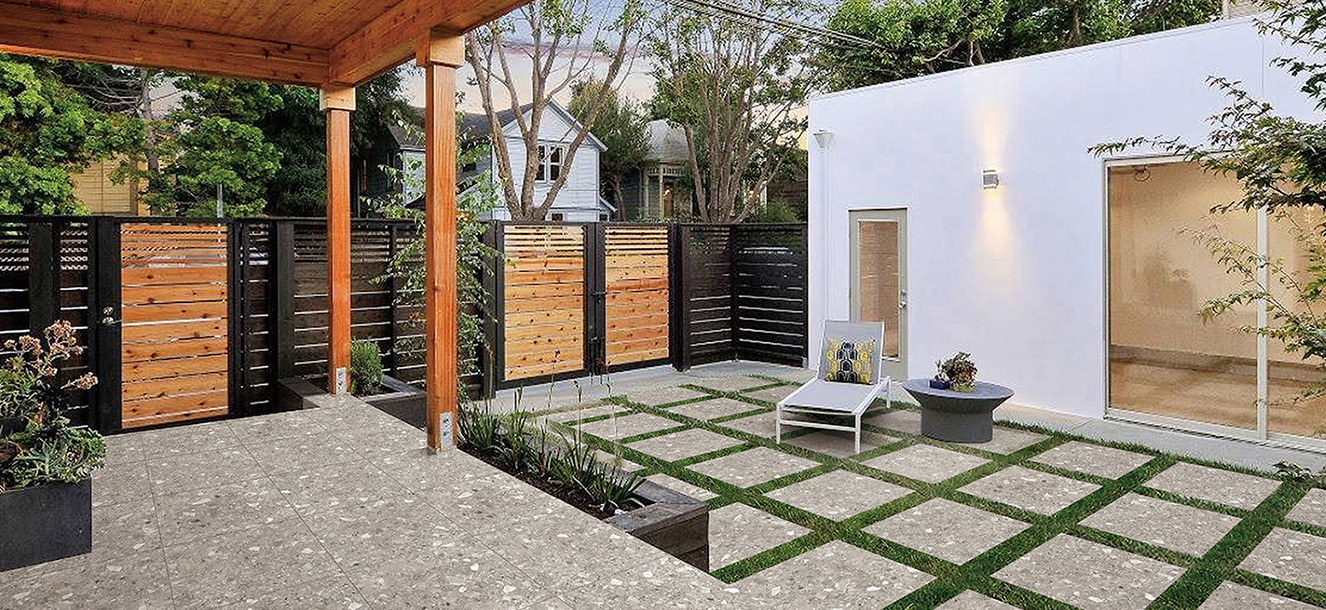
Thought porcelain was only good for indoor tiles? Think again.
Porcelain is among the strongest and most durable materials. Thicker outdoor porcelain pavers rival cement and stone as long-lasting options that are able to withstand weather conditions and ongoing wear and tear. Below, we break down everything you need to know about these beautiful outdoor wonders, helping you make the best decision on pavers for your backyard, front lawn, or pool.
Outdoor Porcelain Pavers in a Nutshell
Although made of the same material as their smaller subway counterparts, porcelain pavers pack a punch when it comes to sturdiness. Porcelain is already a dense, strong material. At a standard thickness of 20mm, this density is only amplified, creating a paver that is built to stand the test of time.
Porcelain’s imitative qualities make it an ideal choice for homeowners who want to emulate a natural stone look. They come with a textured finish for slip resistance and also have a high slip rating, making these pavers suitable for wet, slippery areas (e.g. pools).
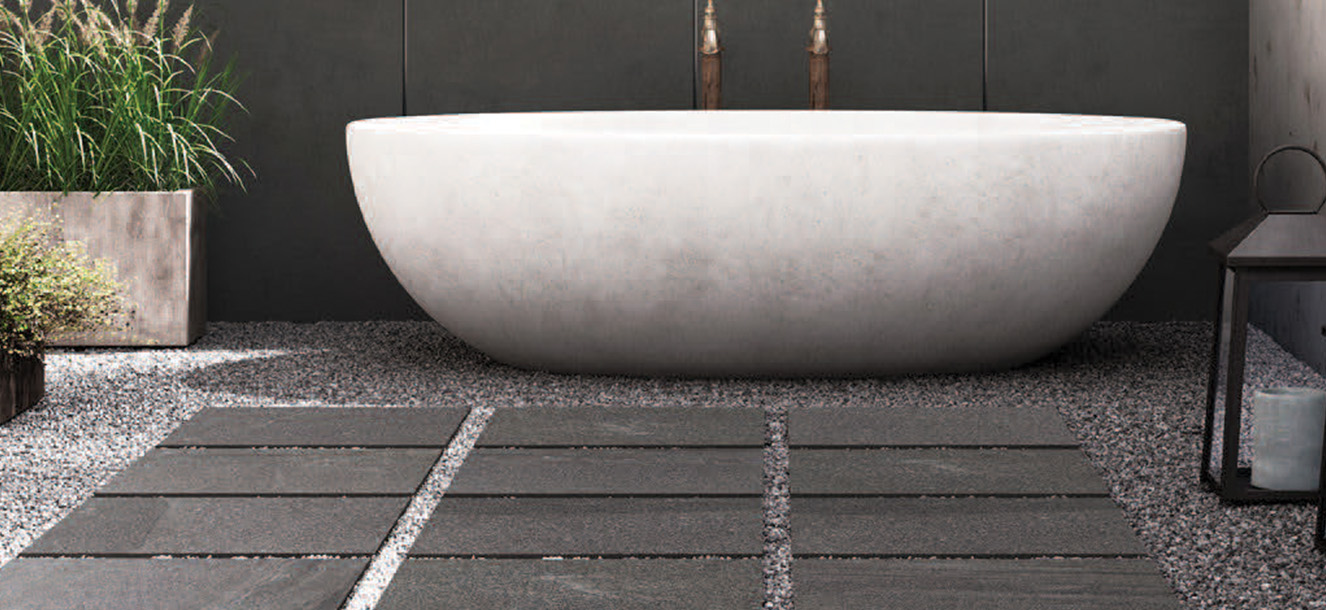
Why We Love Porcelain Pavers
Porcelain pavers carry all the benefits of indoor porcelain tiles. When applied in an outdoor setting, you have material that is highly resistant to damage and requires very little ongoing maintenance. Let’s explore some of these benefits in more detail.
Aesthetics
This is an easy one. Like fine china (only much more durable), outdoor porcelain pavers have enough aesthetic appeal to breathe life into a space. Some designs resemble natural stone, allowing you to play around with elemental textures at a lower price point.
Durability
Don’t let pretty porcelain looks fool you. These outdoor pavers are tough. Place them in areas of high foot traffic and they’ll resist heavy impacts for days (and years) on end.
Variety
Since porcelain is made from clay, there are more options for customisation (similar to indoor tiles). If you desire to extend an interior aesthetic into your outdoor space, porcelain pavers are your best bet. Use pavers to seamlessly replicate your kitchen look in your outdoor pavilion or dining area.
Waterproof
Porcelain tiles are used in showers and kitchens due to their water-resistant qualities. Outdoor porcelain pavers are no different. And due to the higher density, pavers are more waterproof than the standard subway tile. Porcelain pavers are practically non-porous. Moisture can’t get in and erode the composition, making them an ideal installation around pools or locations that experience frequent rainfall.
Stain Resistant
Moisture has a tough time penetrating porcelain, as do chemicals, foods, and other liquids. This stain resistance is compounded when porcelain pavers have a glazed finish. Spills don’t stain, they are simply wiped off. Due to this high stain resistance, you can also use harsher cleaning products on porcelain pavers, making them easier to maintain than concrete or a natural paver style.
Fireproof
Since porcelain pavers are made of clay, they are also naturally fireproof. If a fire occurs within or around the home, porcelain pavers can help limit it from spreading. For this reason, they are ideal in outdoor barbeque areas or regional suburbs particularly prone to bushfires.
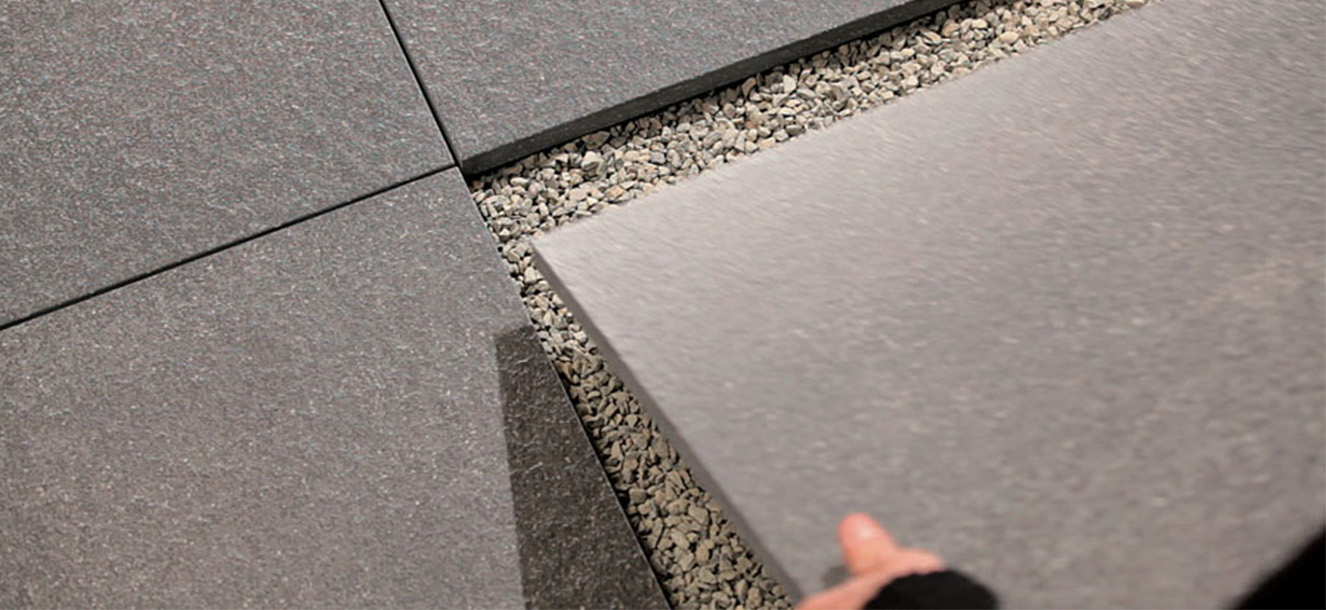
How to Lay Porcelain Pavers Outdoors
From pro tile setters to at-home DIYers, porcelain pavers are loved due to their simplicity and ease of installation. At National Tiles, outdoor porcelain pavers come with a rectified edge. This means that the tile is precisely trimmed for straightness. With all edges perfectly squared off, it is as easy as laying one tile after another. As with stone, porcelain can be laid on grass, a concrete slab, or a gravel/sand base. Rectified edges allow for smaller grout joints, making your outdoor space more seamless. They are also easier to clean due to this feature.
Thinking of using porcelain pavers in a more unique area, like a car driveway? A concrete slab base is a must so that the pavers can cope with heavy car pressure and weight. For an elevated outdoor flooring option, Maximus Pedastal Systems work great with porcelain pavers.
Other Considerations
While porcelain pavers are a breeze to install and maintain, their durable quality could be a point of concern in more complex projects.
Cutting
If you want to customise the tile shape or need to resize a paver to fit in an irregular space, keep in mind that it will be quite difficult to cut. These pavers are very dense and quite difficult to cut in a straight line. It’s even harder to manipulate porcelain into rounded shapes. We suggest consulting with an experienced installer before attempting to cut porcelain pavers on your own.
Weight
Dense pavers are heavy pavers. And porcelain being very dense, is a naturally heavy material. Consider your base and its potential limitations before laying porcelain pavers. If you’re installing pavers on an elevated surface (e.g., a deck), it may be better to consult a professional to determine any structural limitations.