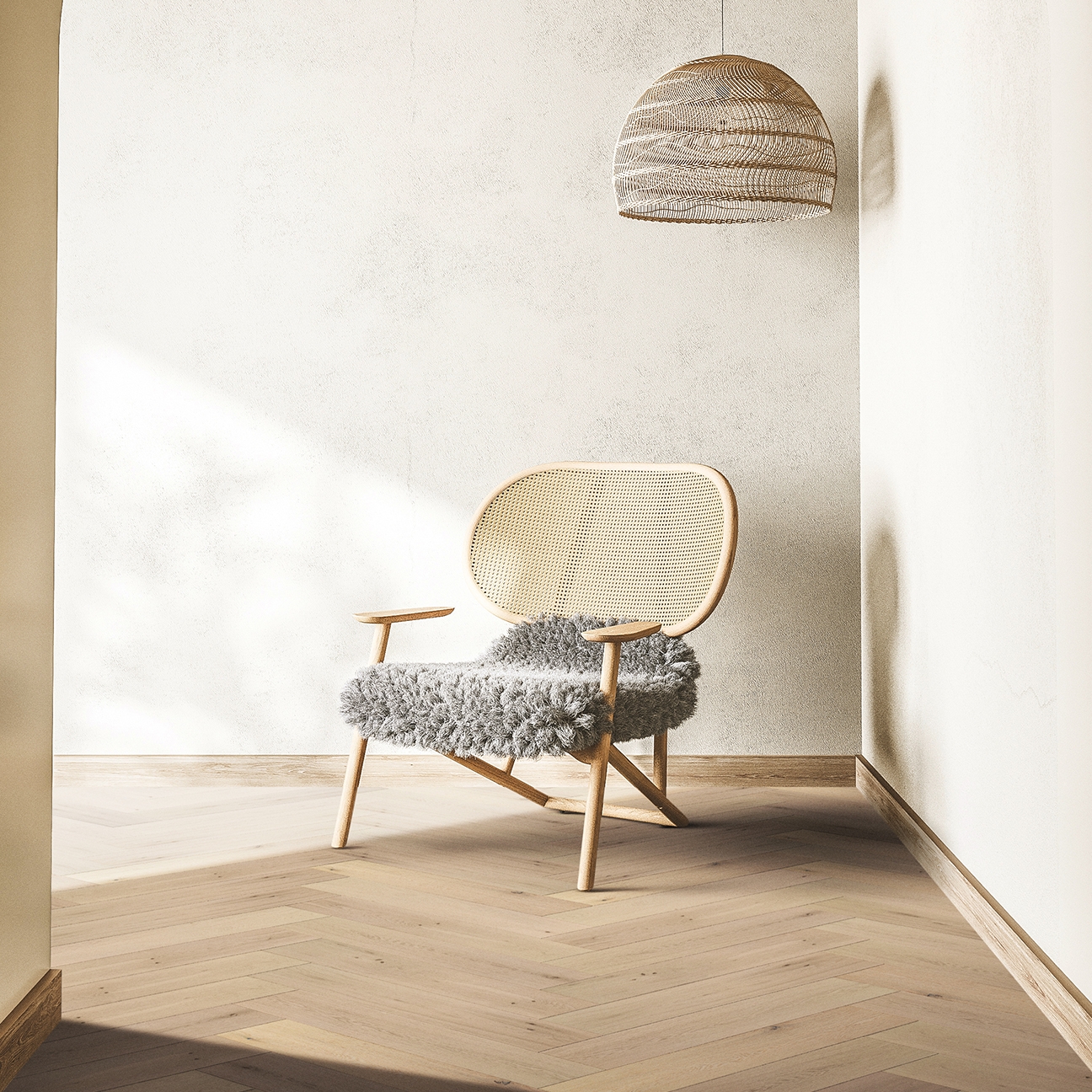


Engineered solutions: fitting flooring to function
Engineered solutions: fitting flooring to function
While many home owners claim that there is nothing to match a solid timber floor, most will fail to distinguish a solid hardwood floor from an engineered hardwood floor, even if the two are laid side by side. And that is really no surprise because you can only see the top layer of any floor, and in both a solid floor, and an engineered floor, that surface layer will be solid wood.
But just because it is all but impossible to tell the difference between engineered and solid hardwood flooring once they have been installed, do not think they are anything but very different types of flooring. While both are manufactured using natural hardwood, the planks are constructed very differently and this affects how, when, and where they can be used.

Engineered hardwood flooring is made up of multiple layers of wood. The surface of the plank - the wear layer - is the part that you see once the floor has been fitted. Wear layers are available in a variety of wood species, such as Oak or Walnut, and can be anything between 2.5 and 6mm in thickness.
The rest of the engineered plank is made up of a set number of base layers that provide additional strength and stability. These base layers are usually formed of plywood, Hevea or Eucalyptus: fixed at a 90 degree angle to give dimensional stability to the plank.
Engineered hardwood can either have a click fitting system, or a tongue and groove profile, and comes in various plank widths, thicknesses, and lengths. There are also different finishes to choose from including oiled, lacquered, brushed, and unfinished. If you choose an unfinished floor, then you will need to protect it with an oil or lacquer once it has been installed.
The full appeal of today’s engineered timber floors is shown by our Project Oak collection. This showcases the timeless beauty of European Oak in four carefully curated colour ways. It comes in a wire brushed matt finish that accentuates the timber’s natural grain. With a 2mm wear layer, Project Oak flooring is manufactured to look great for years.
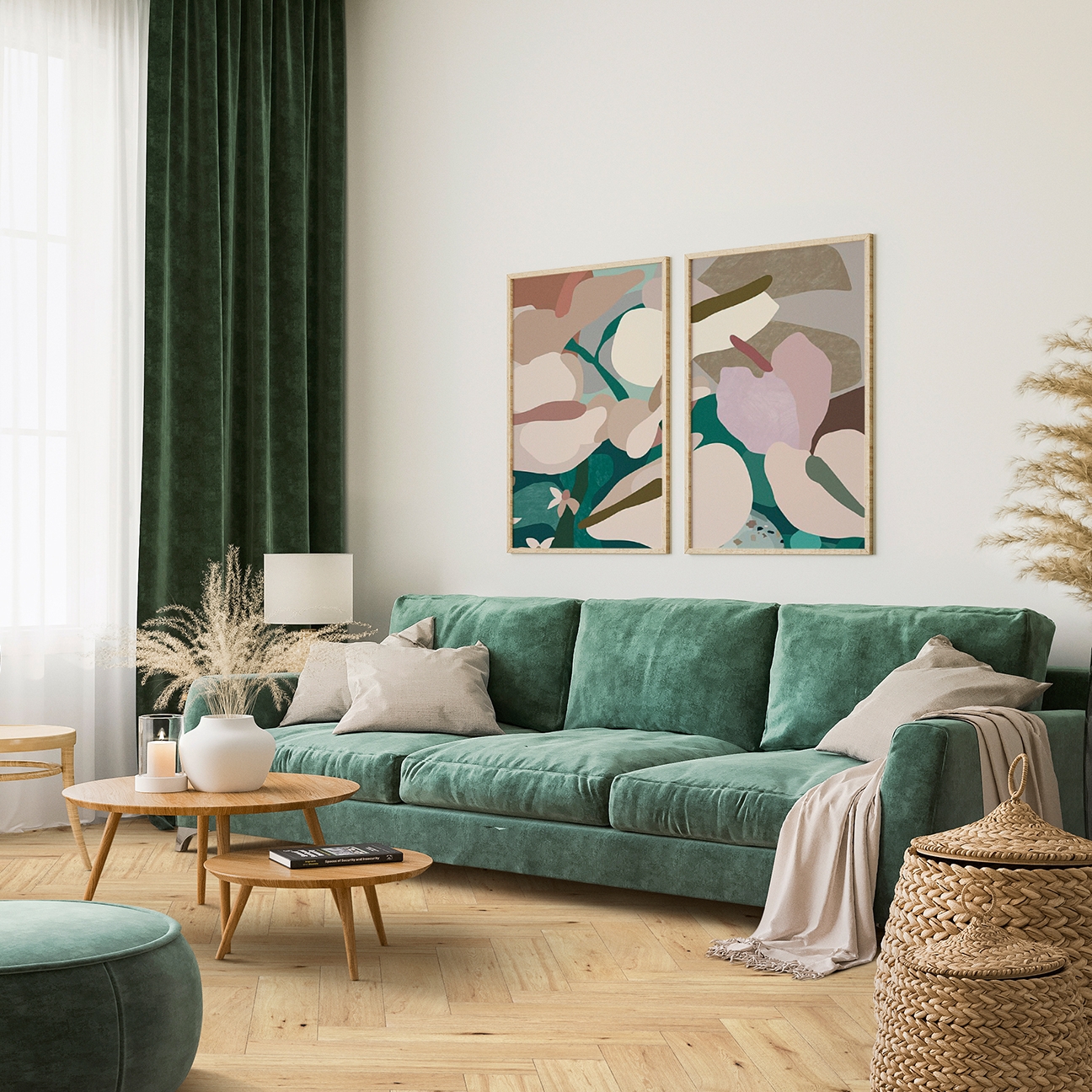
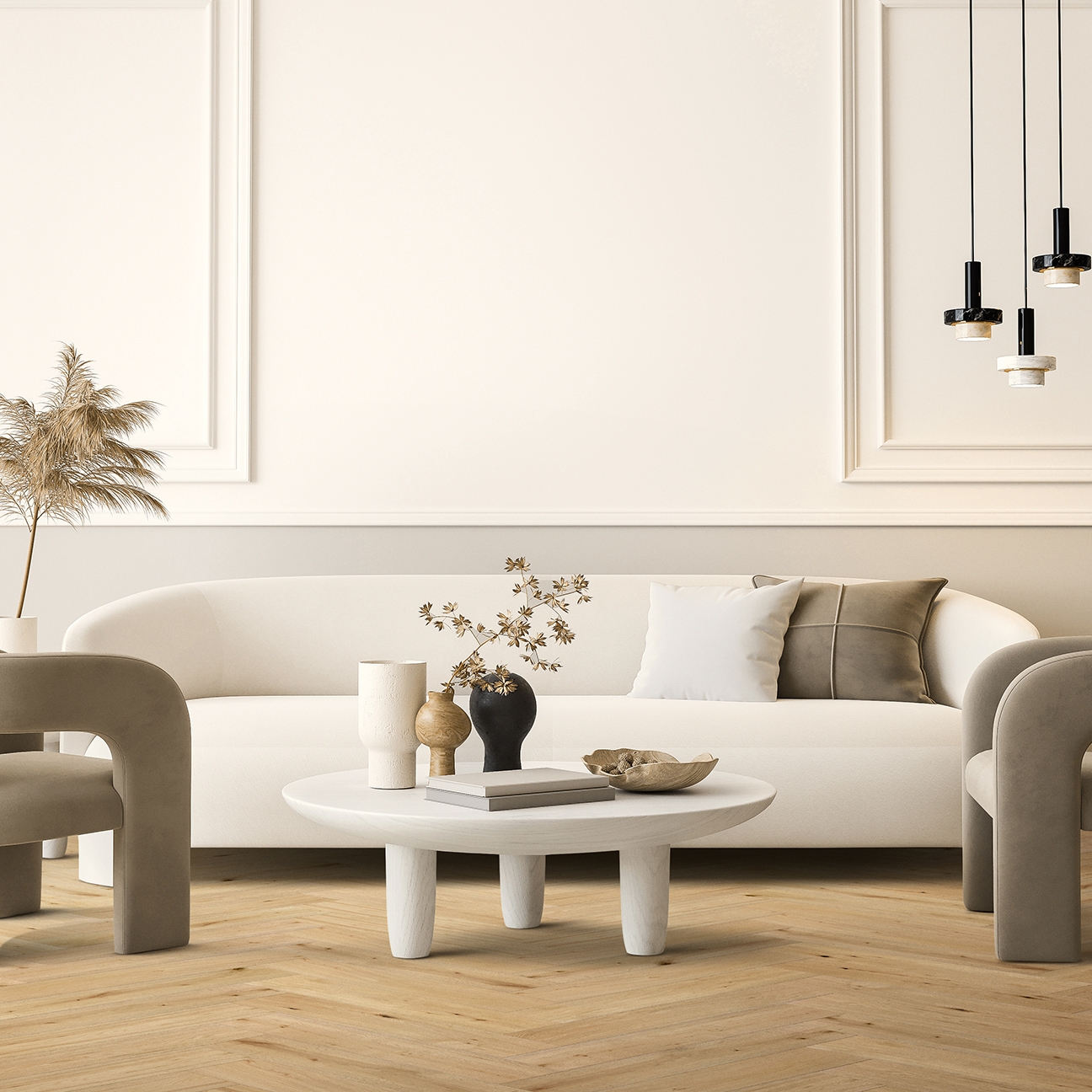
Engineered wood flooring is generally more cost effective than solid hardwood flooring, but can still be sanded and refinished just like a solid wood floor. Crucially, engineered wood floors are more resilient to changes in temperature and humidity than solid wood flooring. This makes them suitable for installing over underfloor heating, or in more challenging environments such as conservatories.
While they can be installed as a floating floor, engineered floors can also be mechanically-fixed to the subfloor. You can’t do this with a solid wood floor. Some engineered hardwood floors are even produced with a precision-engineered click system for quick and easy installation.
Engineered wood flooring comes in an extensive choice of different wood species, styles, colours, finishes, and plank sizes. A great examples is National Tiles’s Concept Oak Engineered Timber. In many ways the gold standard in luxurious internal flooring, Concept Oak is offered in 12 colours ranging from light to dark with a 3mm solid oak top layer. Manufactured using the latest German technology, Concept Oak is stabilised with a multi-ply core that means that it can take the extreme environmental changes of the Australian climate in its stride.
So, if one word sums up the appeal of engineered hardwood flooring it is versatility. In terms of aesthetic choice, application flexibility, and ability to cope with everything life can throw at it, engineered floors have all the answers.